Fields Jackson Fields Jackson

Our numbers are in!! & Our results make the difference


Over the past three (3) years Racing Toward Diversity magazine and College Diversity Network has helped 2,649 students and alumni find jobs, internships with 1,786 students/alumni (67%) coming from HBCU's  

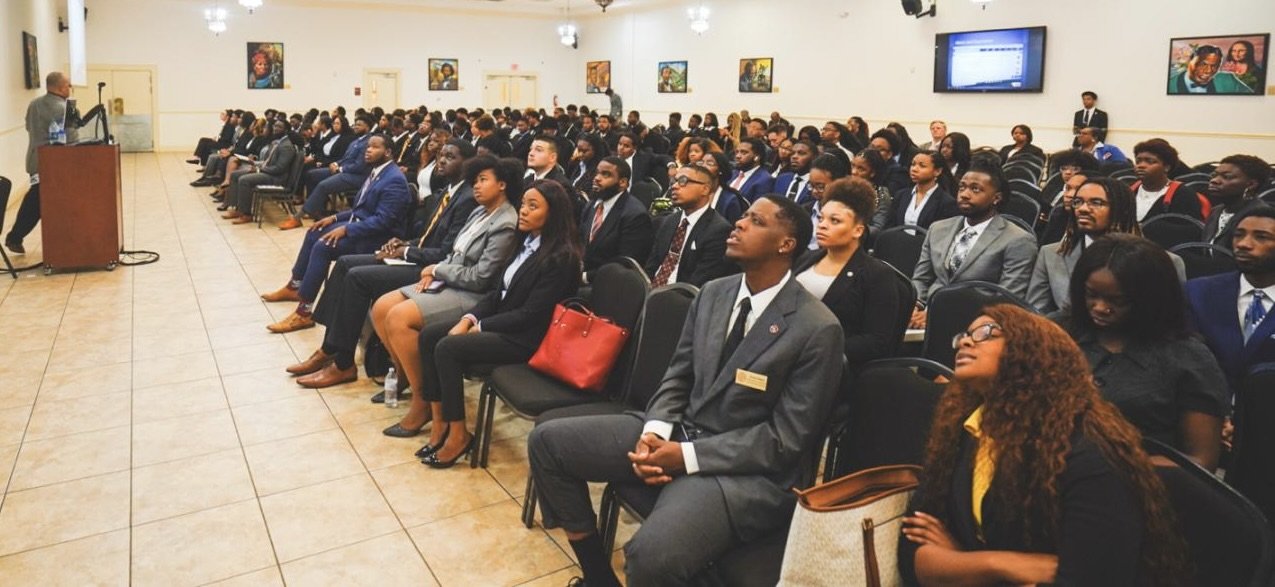
In 2023 we completed - 58 "Visiting Professor" on campus visits to 42 different colleges - covering 15 states, District of Columbia and the Virgin Islands 

For the past three (3) years (Virtual Career Fairs)  

HBCU's = 85 (76% of the 111 HBCU Schools Participated in our virtual careers) 

Other Colleges/Universities = 215

Demographic breakdown 

Undergraduate = (48%) Graduate = (35%) Alumni = (17%) 

Female = (54%) Male = (46%) 

Black = (75%) 

Asian = (10%) 

Hispanic = (6%) 

White = (5%) 

Native American = (1%) 

Other = (3%) 

Non Military = (94%) Veteran = (4%) Active Duty = (2%) 

Willing to relocate 87% - Yes 13% - No


Read More
Fields Jackson Fields Jackson

Racing Toward Diversity / College Diversity Network / HBCU "Visiting Professor" Tour


As of December 1, 2023 

57 "Visiting Professor" on campus visits to 40 different colleges - covering 15 states, District of Columbia and the Virgin Islands

With potential student exposure of 240,811 

Two "Virtual Career Fairs" (February 23rd and September 27th)

Reached 82 HBCU campuses and 160 "Other Colleges and Universities"

Total registration = 1,393 students and alumni

Topics discussed Jobs, Careers, Internships, Corporate Strategic Partnerships, Resume, LinkedIn, Alumni Jobs, Hiring At Scale

Mobile Classroom schedule   Italic= visited

1)      North Carolina A&T, Greensboro, NC Thursday, January 12, 2023  #HBCU

2)      Campbell University, Buies Creek, NC – Friday, January 13, 2023

3)      Tuskegee University, Tuskegee, AL – Thursday, January 26, 2023  #HBCU

4)      Fisk University, Nashville, TN - Wednesday, February 1, 2023  #HBCU

5)      South Carolina State, Orangeburg, SC - Wednesday, February 8, 2023  #HBCU

6)      Claflin University, Orangeburg, SC – Thursday, February 9, 2023 #HBCU

7)      Allen University, Columbia, SC - Friday, February 10, 2023 #HBCU

8)      Ferrum College, Ferrum, Virginia, February 13, 2023

9)      University of Southern Mississippi, Hattiesburg, MS - February 15, 2023

10)   Southern University of New Orleans, New Orleans, LA - Thur, February 16, 2023  #HBCU

11)   Dillard University, New Orleans, LA - Friday, February 17, 2023  #HBCU

12)   Bowie State Wednesday, February 22, 2023 (CIAA Tournament)  #HBCU

13)   Howard University, Thursday, February 23, 2023 (CIAA Tournament)  #HBCU

14)   Morgan University, Friday, February 24, 2023 (CIAA Tournament)  #HBCU

15)   Winston Salem State University, Feb 24, (CIAA Tournament – Baltimore, MD) #HBCU

16)   Saint Augustine's, Raleigh, NC, March 24, 2023  #HBCU

17)   Shaw University, Raleigh, NC, March 24, 2023  #HBCU

18)   South Carolina State University, Orangeburg, SC, March 29, 2023  #HBCU

19)   Claflin College, Orangeburg, SC, March 29, 2023 #HBCU

20)   Southern Univ Baton Rouge Chancellor’s Golf Scramble! Friday, March 31, 2023  #HBCU

21)   Winston Salem State University, Winston Salem, NC, April 4, 2023  #HBCU

22)   Morehouse College, Atlanta, GA, Wednesday, April 11, 2023  #HBCU

23)   Clark Atlanta University, Atlanta, GA, Wednesday, April 11, 2023  #HBCU

24)   Spelman College, Atlanta, GA, Wednesday, April 11, 2023  #HBCU

25)   Johnson C. Smith University, Charlotte, NC, Monday, April 24  #HBCU

26)   Livingstone College, Salisbury, NC Tuesday, April 25  #HBCU

27)   Fayetteville State, Fayetteville, NC Wednesday, April 26  #HBCU

28)   Winston Salem State Univ, May 25, Chancellor Elwood Robinson VIP Reception  #HBCU

29)   Winston Salem State, May 27, Charlotte Motor Speedway/ RACING RAM DAY  #HBCU

30)   Norfolk State, Norfolk, Virginia, Wednesday 8, 2023, August 30, 2023  #HBCU

31)   Hampton University, Hampton, Virginia, Thursday, August 31, 2023  #HBCU

32)   Xavier University, New Orleans, Louisiana, Thursday, September 6, 2023  #HBCU

33)   Dillard University, New Orleans, Louisiana, Friday, September 7, 2023  #HBCU

34)   Southern University, New Orleans, Friday, September 7th and 8th, 2023  #HBCU

35)   Jackson State University, Jackson, Mississippi, Saturday, September 8, 2023  #HBCU

36)   South Carolina State University, Orangeburg, SC, Sept 12, 2023  #HBCU

37)   Claflin College, Orangeburg, SC, Sept 12, 2023 #HBCU

38)   Allen University, Columbia, SC – Thursday, Sept 14, 2023 #HBCU

39)   Benedict College, Columbia, SC, Friday, Sept 15, 2023  #HBCU

40)   University of South Carolina, Columbia, SC, Friday, September 15,2023 #HBCU

41)   Livingstone College, Salisbury, NC, Friday, September 22, 2023  #HBCU

42)   Clinton College, Rock Hill, SC, Friday, September 22, 2023  #HBCU

43)   Bennett College, Greensboro, NC, Founders Day, Friday, October 6, 2023  #HBCU

44)   Livingstone College, Salisbury, NC, October 13, 2023  #HBCU

45)   Alabama A&M vs Alabama State, Magic Classic, Birmingham, Ala, Fri, Oct 27  #HBCU

46)   Alabama A&M vs Alabama State, Magic Classic, Birmingham, Ala, Sat, Oct 28  #HBCU

47)   South Carolina State vs Howard Univ, Homecoming, Orangeburg, SC, Sat, Nov 4  #HBCU

48)   University of Virgin Islands, US Virgin Islands, Monday, November 6th thru 8th  #HBCU

49)   Prarie View A&M Univ, Prarie View, Texas - Guest Speaker via zoom, Nov 15  #HBCU

50)   Fort Valley State University, Fort Valley, Georgia, Thursday, November 16 #HBCU

51)   The Bayou Classic, Grambling University vs Southern University Baton Rouge, New Orleans, Louisiana, Thursday, November 23 - 25th  #HBCU

#Jobs, #Careers, #Internships, #StrategicPartnerships, #Resume, #LinkedIn, #AlumniJobs, #HiringAtScale

 
Read More
Fields Jackson Fields Jackson

Thinking Like a Portfolio Manager

by Isaac Were, Co-founder

www.atharirecruiting.com

If you manage P&L and have hiring authority, you’re both an investor and operator. Most of your decisions put capital to work against actions that are accountable for revenue. That’s quite the responsibility since businesses live and die by revenue. 

Being a good operator is straightforward. You’re focused on executing against (typically tangible) operational objectives. On the other hand, being a good investor is less straightforward. Reason being that anyone who owns a book of business has a large portion of their spend go towards W2 wages. And contrary to Cost of Goods that go into your product or service, the W2 portion doesn’t have a return that’s easy to measure, except perhaps for your sales team. 

So while many business leaders may consider their employees assets to the business, they don’t think like asset managers when it comes to allocating their hiring budget. Instead, they end up hitting the pitfall of separating human assets from financial assets. In most cases, this separation makes sense, especially for accounting purposes on a balance sheet. But let’s take a step back and consider a general definition of an asset for a business.

An asset is a resource with economic value that a business owns or controls with the expectation that it will provide a future benefit. Clearly, by this definition, employees are assets. Each person has an economic value in the hiring marketplace, and if they navigate a useful interview process, then there’s an expectation that they’ll create future benefit for the company. 

If you can get on board with the fact that employees are assets, then there’s a lot you can borrow from modern portfolio theory to get the most out of your W2 allocation. To start, we should highlight the most well known tenet in modern portfolio theory: in a diversified basket of assets, the covariances of the assets determine the risk of the portfolio more than the risk of each individual asset.

Before this principle becomes meaningful, we have to understand what variance represents in an employee. Earlier, we established that employees were assets mostly because there’s an expectation of them creating future benefit for the business. Well, the higher the chance an employee has in varying from that expectation of future benefit, the higher their variance is; or- the more risk they represent. 

So then what’s an employee’s covariance with another employee? Imagine you’re taking a risk on a software engineer coming out of a bootcamp. They may have learned fundamentals well enough from the bootcamp to adapt and thrive, or they might not be able to keep up. Now, if you hired someone from the same exact bootcamp class, the covariance would be very high. In other words, the risk is super similar and increases the risk of the portfolio.

So we’re encouraged to take risk on hires, but vary the type of risk we’re taking. After all, you can’t ever get 2X the expected output from your team without taking risk on people. And if you think about risk like a portfolio manager, then diversity maximizes upside while controlling downside.

 
Read More
Fields Jackson Fields Jackson

There are over 100+ #HBCU's in the United States


Corporations, non profits, employee resource groups (#erg) hiring managers and foundation donors should be aware there are over 100+ #HBCU's in the United States representing just 3% of all colleges. For over a century after the abolition of slavery in 1865, many colleges and universities in the South prohibited African Americans from attending, while institutions in other parts of the country regularly employed quotas to limit admissions of black people. #HBCUs were established to provide more opportunities to African Americans #jobs, #diversity, #inclusion, #leadership #talent 

 
Read More
Fields Jackson Fields Jackson

Innovative Law Center Careers Program Earns Thurgood Marshall Educator Award for Chancellor Pierre

An innovative approach to career possibilities for Southern University Law Center graduates, led by Chancellor John Pierre, has broadened the school’s training for students and placed leaders in C-suites, fellowships, and other top positions around the United States. Pierre was recently named Thurgood Marshall College Fund Educator of the Year for the initiatives.

Pierre, a Louisiana native and youngest son of a sugar cane farmer, earned a bachelor’s degree in accounting from Southern University and A&M College in 1980, a master’s in tax accounting at Texas Tech in 1982, and a law degree from southern Methodist University, in 1985. He joined the Law Center faculty in 1990 and conceived the career strategy in the wake of the 2008 recession that shrank opportunities in traditional legal jobs such as courts and law firms.

“It required us to look at things differently and to provide opportunities for our students in ways they never thought they could have,” he recalls. “What can we do to help our students have robust, transformative careers and still not be affected by the activities going on as a trend in the legal market? We could help students get into other career opportunities where legal skills are relevant.”

That mindset unlocked a vast potential, including corporate compliance opportunities; legal issues such as privacy relating to vital cybersecurity; diversity, equity, and inclusion; intellectual property protection; gaming and esports; entertainment and professional sports; and myriad other fields.

Around that time, Andre Porter, a new law student with an undergraduate degree in engineering was trying to find ways to unite the different sets of expertise when Pierre suggested becoming a patent lawyer. After graduation, Porter enrolled in Georgetown University’s patent law program; he is now a patent attorney at Baker-Hughes in Houston.

When Pierre started a part-time evening program for working students, before he became interim chancellor in 2015 and chancellor in 2016, he noticed that the new students were mature professionals who could take their new knowledge and degree back to the corporate world. One of them, Paula Shepherd, was working at Blue Cross Blue Shield Louisiana; a competitor tried to lure her by paying for law school, and the negotiations led to her becoming Senior Vice President of Benefit Operations.

“Her legal education made a difference,” Pierre says. “The skills she acquired enabled her to be a C-suite executive rather than just a middle manager. We said, ‘What if we take that same attitude to everybody in the building?’”

In addition to its traditional training in such traditional fields as tax, family, domestic violence, and bankruptcy law, the center started a Technology and Entrepreneurship Law clinic, the only one in Louisiana with a process for people to acquire patents, trademarks, and copyright and licensing protection. It helps entrepreneurs from the small business development center next door with incorporation documents, non compete and nondisclosure documents, and other legal work for startups. It added more legal clinics where students gain customer service and other soft skills by working with clients on real-world issues. It holds a boot camp for students to learn about artificial intelligence, block chain, and other leading-edge technologies that lawyers will encounter.

“When we started introducing these students to these opportunities, they flourished,” Pierre says, adding that Silicon Valley firms, the U.S. Patent and Trademark Office, and other organizations have supported the effort. Two students have won Hennessey fellowships, $40,000 a year plus up to $10,000 for service projects, and a chance at internships with the luxury goods conglomerate LVMH. Last year, the Law Center received a federal grant to establish a Minority Business Development Agency (MBDA) Business Center.

To help ease the labor shortage after the COVID-19 pandemic, the Law Center helps citizens get disqualifying small crimes on their record expunged, a process that is still costly even when marijuana legalization and other factors make it possible. The expungement initiative is funded through grants and partnerships with state organizations, such as Louisiana Workforce Commission, because of its significant impact on employment.

Law Center students and supervising attorneys also help people gain clear title to their land that might have been inherited without a probated will or legal succession paperwork. Lack of title prevents owners from receiving federal assistance or insurance after disasters such as Hurricane Katrina.

Pierre says employers who hire Law Center graduates notice their work ethic, their exceptional qualities – “gritty, resilient, hungry for new opportunities, willing to do the work, showing up with intent” – and seek to recruit more. The institution’s reputation also attracts students from across the country – 40 percent now come from outside Louisiana.

 
Read More